Sudoku Strategies: Hidden Doubles
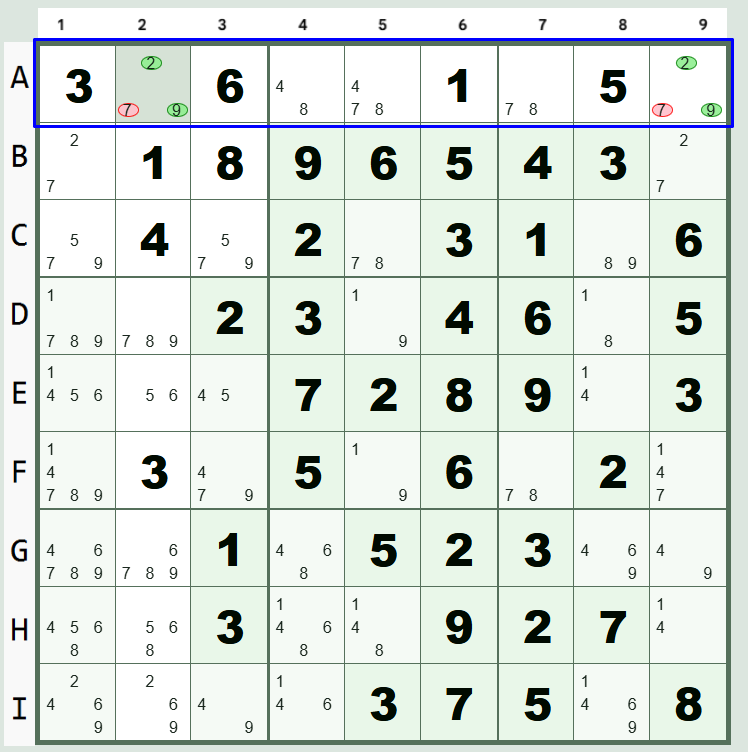
Hidden Doubles (Hidden Pairs)
"Hidden doubles," more commonly referred to as Hidden Pairs in Sudoku, are an advanced solving technique used to eliminate candidate numbers within two specific cells of a row, column, or 3x3 block (called a "house" or "region").
The key characteristic is that the pair of numbers is "hidden" among other potential candidates in those two cells.
Detailed Explanation
A hidden pair occurs when:
- Two specific candidate numbers appear in exactly two cells within a single house (row, column, or 3x3 box).
- These two numbers do not appear as candidates in any other cell within that same house.
The Logic
The logic behind the technique is based on the fundamental rule of Sudoku that each number must appear exactly once in every row, column, and block.
- If a pair of numbers (e.g., 2 and 9) can only logically be placed in two specific cells within a region.
- Then those two cells must contain the numbers 2 and 9, in some order.
- It doesn't matter yet which cell gets the 2 and which gets the 9; what matters is that the values are restricted to this pair.
- Therefore, all other candidate numbers can be safely removed from those two cells. This elimination process often reveals new "naked singles" or other patterns that help solve the rest of the puzzle.
How it Differs from a Naked Pair
- Naked Pair: In a naked pair, the two cells contain only the two paired numbers as candidates (e.g., one cell has only
{2, 9}, and the other has only{2, 9}). No other candidates are present in these cells. - Hidden Pair: In a hidden pair, the cells contain many other candidates besides the special pair (e.g., one cell might have
{1, 2, 3, 4, 9}and the other{1, 2, 5, 6, 9}). The2and9are "hidden" among the other numbers because they appear only in those two cells within the region.